
The Endless Scroll: Gen Z’s Need to Feel Understood in Content Discovery

It’s a typical weeknight. My friends and I are back from a long day of classes, ready to relax, snack, and watch something entertaining. We open the streaming app—only to realize we’ve finished the series we were following. Suddenly, the chill vibe shifts into a familiar frustration: the endless search for what to watch next. At first glance, this looks like a lack of personalized discovery. But beneath the surface, there’s something deeper at play.
The Real Issue: Gen Z’s Need to Feel Understood
Gen Z’s desire isn’t just personalization—it’s to feel genuinely understood. Survey data from the USC Art.Ificial x Stanford Entertainment Lab underscores this clearly. When asked about how they discover content, Gen Z respondents ranked streamer algorithms a distant fourth—far behind user-curated reviews, Google, and social media. Why? Because algorithmic suggestions feel shallow, missing the nuanced emotional layers that make something “feel right.” Platforms like Letterboxd, IMDb, and Rotten Tomatoes remain trusted because they offer something closer to a friend’s recommendation: personal and emotionally-resonant.
One respondent summed it up: “I wish AI could suggest movies based on the vibe I’m feeling and use past engagement to come up with them.” Another asked for “AI playlists for a specific vibe.” The frustration isn’t just about finding the next thing to consume—it’s about wanting to be understood as a whole person, with moods, memories, and emotional needs.
Respondents emphasized that it’s not enough to say, “You like Modern Family, so you’ll like XYZ.” Instead, they want deeper context and clarity: “Explain it. You like Modern Family because it has documentary-style filmmaking, sarcastic punchlines, and ensemble casts.” This desire for transparency shows up repeatedly. Even comments about content filtering and algorithmic explanations tie back to this core need. Whether it’s pre-sorting recommendations to avoid unwanted content (like drugs or violence) or breaking down why a song was suggested, users want systems that reflect their values and preferences.
Why This Need Is Especially Strong for Gen Z
Every generation wants to feel seen, but for Gen Z, that need is heightened by the unique way they’ve grown up: fully immersed in digital culture from childhood. Constant exposure to algorithms has made them especially aware when personalization feels off, especially in a world where identity, emotion, and community are deeply intertwined with the content being consumed. TikTok, for instance, isn’t just a platform for entertainment. It's a space where users constantly reflect on how they feel, share vulnerable moments, and build connections through cultural references. This has trained Gen Z to expect a certain level of emotional depth and cultural fluency in the media they engage with. That’s why more than 75% of respondents discover new movies, shows, and podcasts through TikTok or Instagram clips. These are platforms powered by human voices, emotions, jokes, and cultural references that algorithms struggle to replicate.

So when streaming platforms serve up bland, pattern-matched recommendations, it’s not just inconvenient, it feels alienating. It reinforces the sense that the system sees users only as data points.
Discovery as a Mirror of the Problem
The problem of content discovery is one of the clearest manifestations of this broader disconnect. Discovery sits at the heart of how we interact with media, and it’s where the gap between “being known” and “being understood” becomes most visible.
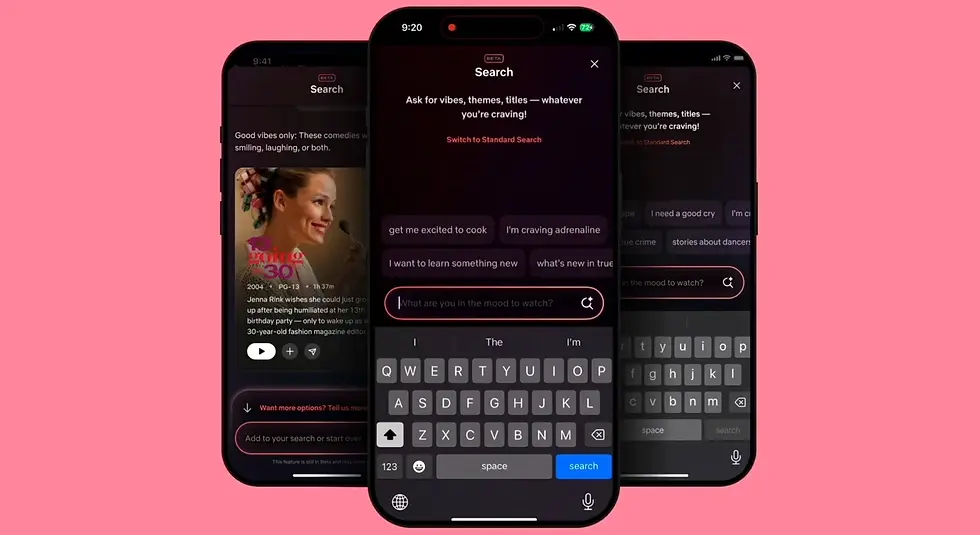
Even though AI promises smarter personalization, current systems still rely on basic pattern recognition. “We should be able to talk to Netflix about our preferences and/or mood and it will pick a movie for you,” one respondent said, echoing a common frustration. Another imagined “an AI-powered story engine that adapts narratives in real time... where the plot evolves based on your reactions, choices, and mood.” Someone else took it a step further: “I want to write actions for characters in [my] favorite shows so they act out scenes I'd like to see.”
“We should be able to talk to Netflix about our preferences and/or mood and it will pick a movie for you.”
These visions reveal that Gen Z doesn’t just want to consume media—they want to co-create and shape it, wishing they could feed real-time nuance into their recommendation algorithms and turn discovery into an ongoing conversation. But for now, these ideas are mostly aspirations. ChatGPT and other conversational AI tools still rank low in entertainment discovery (fifth place, per the survey), showing that being conversational alone isn’t enough to feel understood. Gen Z wants tools that not only collect data but interpret it in emotionally nuanced ways. I’ve tested this myself with such tools—seeing if ChatGPT can pick up on subtle cues in my phrasing and coming to the realization that while Siri might recognize my voice, she doesn’t really listen.
What’s Missing and What’s Next
The challenge, then, isn’t simply about building better discovery tools. It’s about rethinking what personalization means when the goal is to make people feel understood. That means moving beyond genre tags and watch-history to tap into mood, nostalgia, identity, and even real-time emotional states.
One respondent described a dream system: “An AI-powered ‘Mind-Reading’ Commentary System could provide real-time explanations, insights, or assistance based on our thoughts and emotional reactions.” These ideas point to a broader desire not just to consume media but to engage with it in ways that feel personal, validating, and participatory.
From Personalization to Emotional Understanding
Gen Z’s relationship with media is defined by a deep need to feel understood. Discovery is just one area where that need is glaringly unmet today—but it reflects a larger opportunity. The next wave of AI in entertainment shouldn’t aim to make systems “feel human.” It should aim to understand humans better.


Comments